
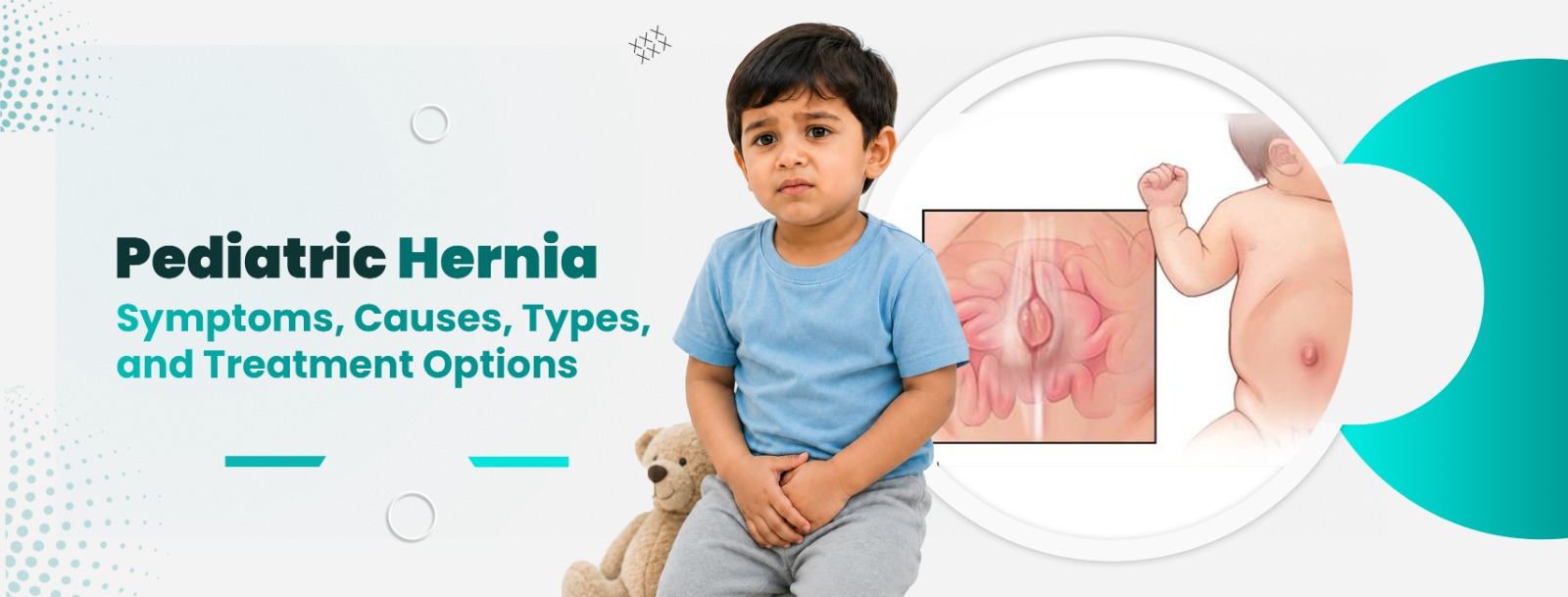
A Pediatric Hernia is a common condition that affects babies and children. It happens when an organ or tissue pushes through a weak area in the muscle wall. Hernias are usually not dangerous at first, but they should be checked by a pediatric specialist to avoid complications.
Early diagnosis and proper treatment can help your child recover quickly and comfortably. At Prabhas Pediatrics, experienced child healthcare specialists provide comprehensive evaluation and treatment for various childhood conditions, including hernias.
What is a Pediatric Hernia?
A Pediatric Hernia occurs when a part of the intestine or other tissue pushes through a weak spot in the abdominal muscles. This often appears as a soft lump or swelling, especially when the child cries, coughs, or strains.
Hernias are common in infants and young children and may require medical attention depending on their type and severity.
Types of Pediatric Hernia
- Inguinal Hernia
This is the most common type of hernia in children. It appears in the groin area and is more common in boys.
- Umbilical Hernia
This type develops near the belly button. Many umbilical hernias close on their own as the child grows.
- Epigastric Hernia
This occurs between the chest and belly button due to a weakness in the abdominal wall.
Symptoms of Pediatric Hernia
Parents should watch for these common Hernia Symptoms in Children:
- A visible lump or swelling in the groin or belly area
- Swelling that becomes more noticeable when crying or coughing
- Pain or discomfort in older children
- Irritability in infants
- Nausea or vomiting in severe cases
- Redness or tenderness around the swelling
If the swelling becomes hard, painful, or cannot be pushed back in, seek immediate medical care.
Causes of Pediatric Hernia
Several factors can contribute to a Pediatric Hernia, including:
- Weakness in the abdominal muscles present at birth
- Premature birth
- Family history of hernias
- Increased pressure in the abdomen
- Certain medical conditions affecting muscle development
Many children are born with the condition, making early monitoring important.
How is Pediatric Hernia Diagnosed?
Doctors usually diagnose a Pediatric Hernia through a physical examination. In some cases, imaging tests such as ultrasound may be recommended to confirm the diagnosis and determine the best treatment plan.
At Prabhas Pediatrics, specialists carefully assess each child and provide personalized treatment recommendations.
Treatment Options for Pediatric Hernia
The treatment depends on the type and size of the hernia.
Observation
Some umbilical hernias may close naturally as the child grows.
Pediatric Surgery
Certain hernias, especially inguinal hernias, often require Pediatric Surgery to prevent complications. The procedure is generally safe and has a high success rate.
Follow-Up Care
Regular medical check-ups help ensure proper healing and monitor recovery.
When Should You See a Doctor?
Contact a pediatric specialist if your child has:
- Persistent swelling in the groin or abdomen
- Pain or discomfort
- Vomiting along with swelling
- Redness or tenderness around the affected area
Early treatment can prevent complications and support a faster recovery.
Trust Prabhas Pediatrics for Expert Child Care
When it comes to your child’s health, choosing the right pediatric care provider is important. The experienced team at Prabhas Pediatrics offers expert diagnosis, treatment, and follow-up care for Pediatric Hernia and other childhood health concerns.
Parents can visit https://www.prabhaspediatrics.com to learn more about pediatric healthcare services, schedule consultations, and receive trusted medical guidance for their children.
Conclusion
A Pediatric Hernia is a common condition that can often be treated successfully when diagnosed early. Understanding the symptoms, causes, and treatment options helps parents make informed decisions about their child’s health. If you notice any signs of a hernia, consult a pediatric specialist promptly for proper evaluation and care.